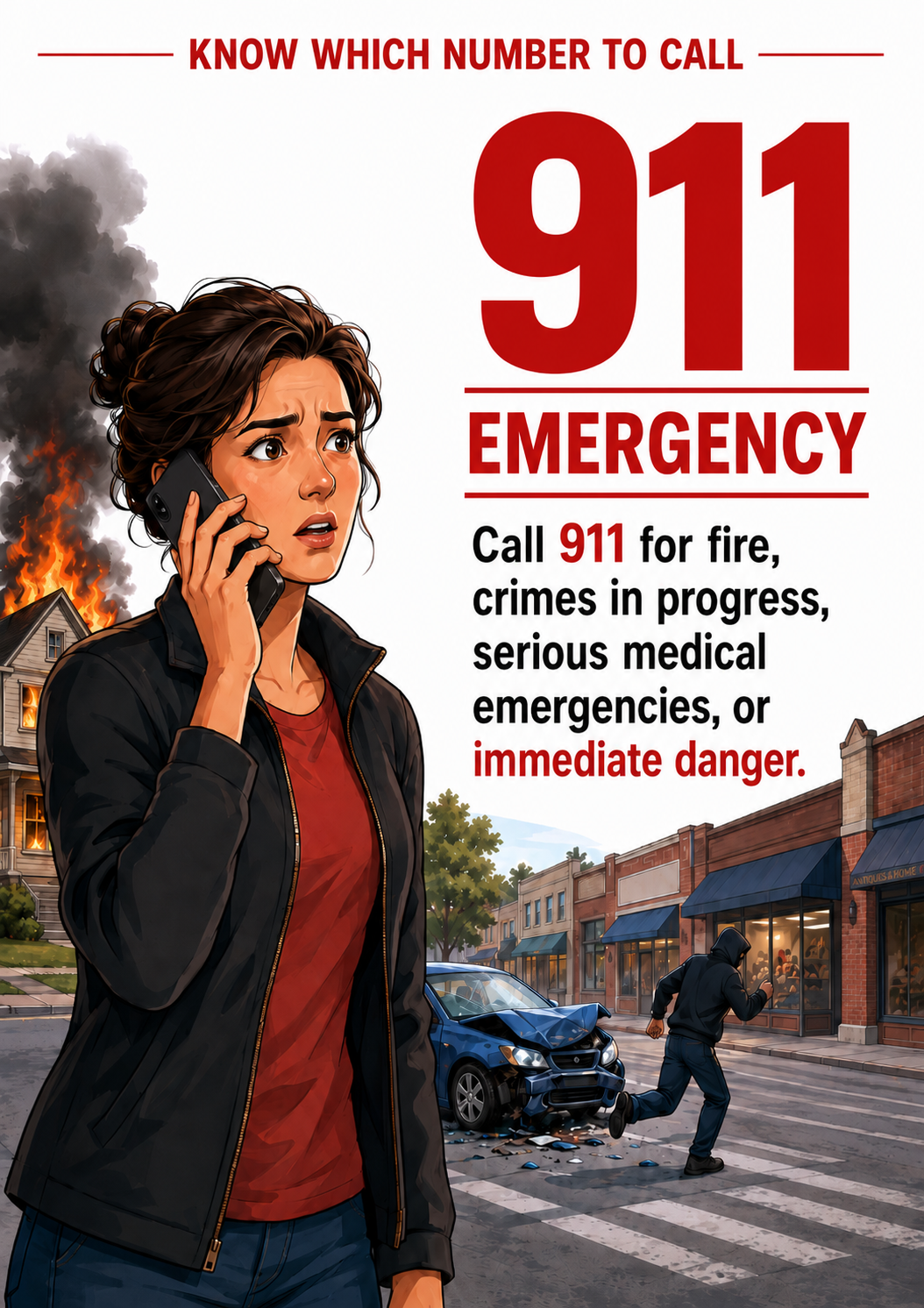
Because people often don’t know who else to call, they dial 911 for minor issues that should be handled elsewhere [1]. This forces dispatchers to sort through non-emergency requests at the exact moment they need to be answering calls that save lives.
This extra volume hits an emergency workforce already facing severe understaffing and heavy burnout [2]. When call centers get overwhelmed, wait times spike, critical calls go unanswered, and precious seconds are lost when they matter most [3].
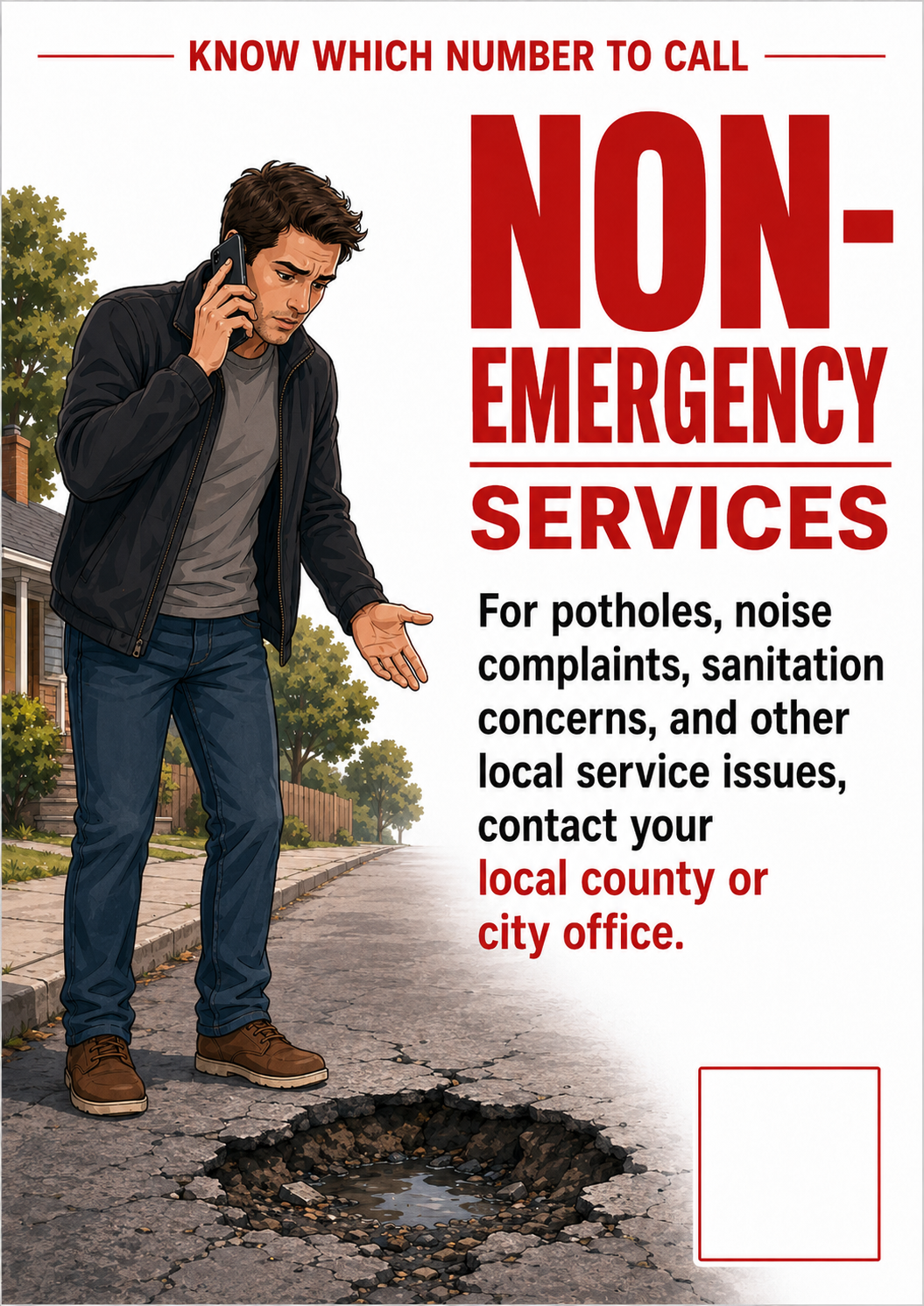
We can directly protect these critical lifelines by guiding people to the right numbers before they default to 911. Dialing 988 connects you to immediate, 24/7 mental health crisis support; 211 hooks you up with essential community resources like housing or food assistance; and 311 (or local municipal lines) handles city services and non-urgent complaints. Simple public education ensures 911 operators can focus entirely on saving lives, slashes avoidable delays, and keeps help just seconds away when a true emergency strikes.